
Greenhouse gas emission reduction & building a Net Zero 2050 roadmap
Turning greenhouse gas inventory data into quantified, technically feasible emission reduction solutions that cut operating costs and help exports clear international carbon barriers.
15% – 40%
Quantified CO₂e emission reduction rate on actual production lines
ISO 14064-2
Independent quantification, monitoring and reporting of project-level emission reductions
SBTi ready
Setting a carbon neutrality roadmap based on global climate standards
CBAM pass
Optimizing product carbon footprint (PCF) to clear European tariff barriers
Realities & compliance pressure
Why must enterprises act to reduce greenhouse gas emissions today?
An inventory is only the initial diagnosis. Without proactively implementing technical emission reduction measures, enterprises will face unpredictable economic losses and supply chain risks.
Passive risk
Stopping at the inventory stage (no mitigation measures)
- Subject to the maximum carbon tariff under the EU CBAM, eroding 12% – 28% of net profit margin.
- Risk of removal from the Tier-1/Tier-2 lists of major supply chain corporations (Apple, Samsung, Nike, IKEA).
- Energy costs (electricity, coal, diesel) keep rising, while systems waste heat & pressure.
- Facing administrative penalties or tighter emission allowance allocations under Decree 06/2022/ND-CP.
Status: Rising costs • Lost competitive advantage
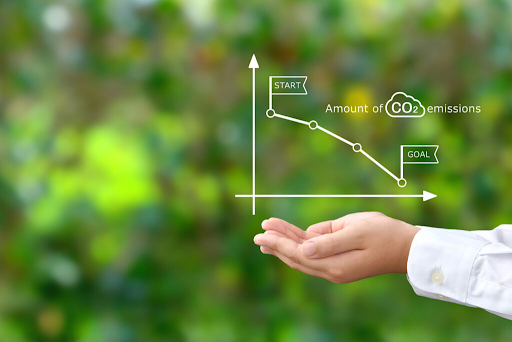
Empirical evidence // BKET Metrics
Quantifying the carbon footprint • Controlling energy flows
Every ton of CO₂e reduced equals real money retained by the enterprise through thermodynamic efficiency.
Benefits with BKET
Implementing comprehensive mitigation solutions
- Cut energy bills by 10% – 30% through waste heat recovery, compressed air leak prevention and VFD optimization.
- Transparent product carbon footprint (PCF) dossiers with third-party certification for smooth exports to the EU & US markets.
- Generate VCS/GS-standard carbon credits or I-REC clean energy certificates for profitable trading.
- An SBTi-aligned Net Zero roadmap helps enterprises easily access green credit at preferential interest rates.
Result: Optimized cash flow • Protected market share
Industrial engineering systems
Comprehensive emission mitigation engineering
BKET applies integrated solutions spanning thermodynamic engineering, electrification and carbon allowance markets, ensuring transparent quantification.
Science-based roadmap model // Net Zero 2050 Roadmap
 SBTi & ISO 14064-2 compliant
 Heat recovery & VFDs
Pillar 01 // Scope 1 & 2
Energy efficiency optimization
Boiler flue-gas heat recovery, elimination of industrial compressed air leaks, smart VFD installation and automatic chiller control via the BKET-EMS system.
10% – 25% reduction in kWh/steam
 Solar Rooftop & BESS
Pillar 02 // Clean Energy
Renewable energy transition
Building self-consumption rooftop solar, integrating BESS battery storage to stabilize loads, and converting coal-fired boilers to biomass boilers (rice husk pellets, wood chips).
Eliminate 85% – 100% of fossil fuels
 Heat pumps & industrial EVs
Pillar 03 // Electrification
Electrification & process optimization
Converting in-plant material handling vehicles to electric, using industrial heat pumps for hot water supply and optimizing closed-loop recirculation of production by-products.
Eliminate on-site emissions
 Carbon credits & I-REC
Pillar 04 // Neutrality
Carbon neutrality & offsetting
Developing internationally certified carbon credits (VCS Verra, Gold Standard), trading I-REC clean energy certificates and building a green supply chain (Scope 3 carbon insetting).
Offset 100% of residual emissions
Engineering cash-flow allocation model
Carbon abatement cost curve (MACC matrix)
The MACC (marginal abatement cost curve) model helps business owners and CFOs accurately classify immediately profitable, fast-payback solutions before rolling out capital-intensive items.
Marginal abatement cost curve (MACC) chart
Marginal cost analysis and cumulative carbon reduction potential

Negative cost zone (quick wins)
Compressed air, insulation, VFD & heat recovery – Immediate savings, payback under 2 years.
Positive cost zone (strategic shift)
Solar power, biomass boilers, BESS & I-REC – Toward Net Zero neutrality.
Negative cost // Immediate returns
Operations & maintenance optimization group
Low-cost measures that immediately cut Scope 1 & Scope 2 emissions by controlling energy losses.
- Survey & fix compressed air leaks — Payback 3-6 mo
- Insulate steam valves and fittings — Payback 4-8 mo
- Optimize distribution system pressure — Payback 2-4 mo
- Switch to LED lighting with smart sensors — Payback 6-10 mo
Priority: Immediate implementation
Medium cost // High ROI
Technical equipment upgrade group
Upgrading component technologies, installing thermal energy recovery equipment and optimizing the power factor.
- Install VFDs on fans and pumps — Payback 1.5 – 2 years
- Economizer for flue-gas heat recovery — Payback 1.8 – 2.5 years
- BKET-EMS power monitoring system — Payback 1.2 – 2 years
- Solar power under the ESCO model (zero capital) — Save 10% immediately
Priority: Annual plan (moderate CAPEX)
Strategic investment // Net Zero
Technology structure transformation group
Radically changing heat generation, captive power generation and very large-capacity cooling systems to fully eliminate emissions.
- Circulating fluidized bed biomass boiler — Payback 3 – 4.5 years
- Oil-free magnetic bearing chiller — Payback 3.5 – 5 years
- Industrial BESS battery storage — Payback 4 – 6 years
- VCS/Gold Standard carbon credit offsets — Reach Net Zero
Priority: Long-term roadmap 2030 – 2050
Quick calculation simulation
Emission reduction potential & cost savings calculator
Estimate the economic benefits and corresponding CO₂e reduction when applying BKET’s combined engineering solutions.
BKET-Model projection
Total projected reduction
0%/ total emissions
Industrial implementation standard
5-stage process for building an emission reduction roadmap
Ensures legal validity, conformity with the international ISO 14064-2 standard and the strict requirements of independent international auditors.
 Field Energy Audit • Sankey Flow
Field measurement • Independent data assurance
High-precision thermodynamic measurement methodology
BKET’s 5-stage process combines specialized on-site instruments (ultrasonic compressed air leak detectors, infrared thermal cameras, flue gas analyzers) with BKET-EMS digital software, fully eliminating assumption errors from emission reduction models.
Measurement & baseline setting
Consolidating energy audit and GHG inventory data (Scope 1, 2, 3) to accurately establish baseline emissions.
Technical potential assessment
On-site thermal and pressure measurement with specialized instruments, mass balance analysis & MACC cost curve modeling.
SBTi science-based roadmap
Setting targets per the Science-Based Targets standard with detailed phasing: 2030 milestone (30% reduction), 2040 (60% reduction) and Net Zero 2050.
Engineering design & EPC
Turnkey engineering design, supply and installation, or an ESCO shared-savings model with no upfront capital.
MRV measurement & verification
Digital MRV monitoring via BKET-EMS software, coordinating with independent certification bodies to verify actual emission reductions.
Proven track record
Field projects & key industrial partners
GHG emission reduction solutions successfully implemented by BKET at large-scale manufacturing complexes in Vietnam.

Textiles • Dyeing
8-3 Textile project

Mechanical fabrication • Offshore energy
PTSC Mechanical project

Precision PCB electronics
MEIKO Electronics project
Trusted clients & partners working with BKET




Expert Q&A
FAQs on emission reduction & Net Zero roadmaps
Key questions from manufacturing business owners and energy managers as they begin approaching a carbon neutrality roadmap.
1. If an enterprise has already done a GHG inventory, is emission reduction mandatory?
A greenhouse gas (GHG) inventory is only a review of input data. Under climate change regulations and annually allocated emission allowances, key emitting facilities must have a quantified mitigation plan. Moreover, if you export to Europe or are part of multinational supply chains, customers will require you to demonstrate annual carbon footprint reductions to avoid CBAM carbon tariffs or the loss of supply contracts.
2. What is a Net Zero roadmap under SBTi (Science Based Targets initiative)?
SBTi is a science-based emission reduction standard aimed at limiting global temperature rise to 1.5°C above pre-industrial levels. Setting SBTi targets ensures an enterprise reduces emissions not arbitrarily but in clear phases: near-term targets (30-50% reduction within 5-10 years) and long-term targets (at least 90% reduction by 2050, with only the remaining 10% covered by carbon offsets). This is the strongest assurance of an enterprise’s ESG transparency.
3. Is implementation expensive? Does BKET offer a zero-capital ESCO model?
Large upfront capital is not necessarily required. BKET applies a phased MACC approach: start with negative-cost solutions (quick wins such as compressed air leak prevention, insulation, process optimization) and reinvest the savings. For large projects such as rooftop solar or biomass boilers, BKET offers an ESCO (Energy Service Company) model: BKET and its financial partners fund 100% of the investment and installation, and the enterprise pays only from its monthly electricity/heat savings.
4. How can emission reductions be demonstrated to EU CBAM customs?
CBAM requires quantified reporting of embedded emissions in each unit of goods produced, following the EU’s strict methodology. BKET helps enterprises build a digital MRV (measurement – reporting – verification) system, compile product carbon footprint (PCF) reports per ISO 14067, and provide complete documentation for independent international verifiers to issue valid certification for EU customs.
5. How does BKET support carbon credit verification and registration?
BKET has a team of technical experts highly experienced in ISO 14064-2. We provide end-to-end services: surveys and project design document (PDD) preparation, measurement methodologies for calculating avoided emissions, coordination with international validation/verification bodies (VVB) for on-site verification, and carbon credit registration on reputable international registries such as Verra VCS and Gold Standard, or issuance of I-REC renewable energy certificates.
Partner with BKET experts
Book a free consultation & on-site emission reduction survey
BKET’s electromechanical engineers and emission experts will contact you to review your profile and conduct a preliminary site survey at your plant within 48 working hours.